


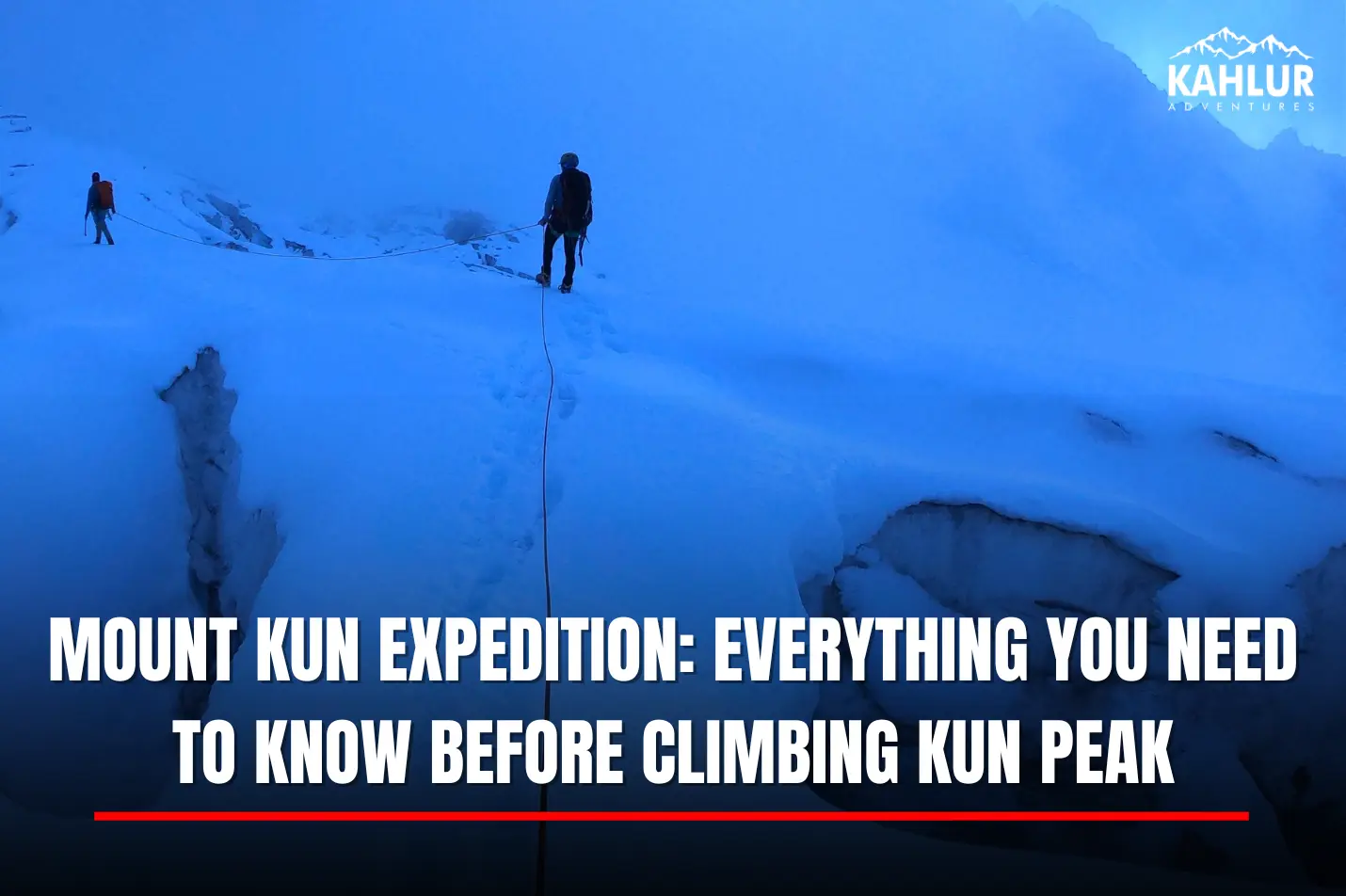
01 May Mount Kun Expedition: Everything You Need to Know Before Climbing Kun Peak
Mount Kun Expedition: Everything You Need to Know Before Climbing Kun Peak
Mountains above 7,000 meters do not forgive shortcuts. Mount Kun appears to be silent in the pictures, almost welcoming, yet the truth is found a bit later when you have already taken your first steps around, and the air is thin, and you can walk half as slow. A Mount Kun expedition is not about ticking a peak. It is about whether your body and mind can hold steady when everything feels harder than expected.
This blog walks through what actually matters before stepping onto that glacier. The small things, the real risks, and the decisions that shape your summit chances.
Where Mount Kun Stands in the Climbing World
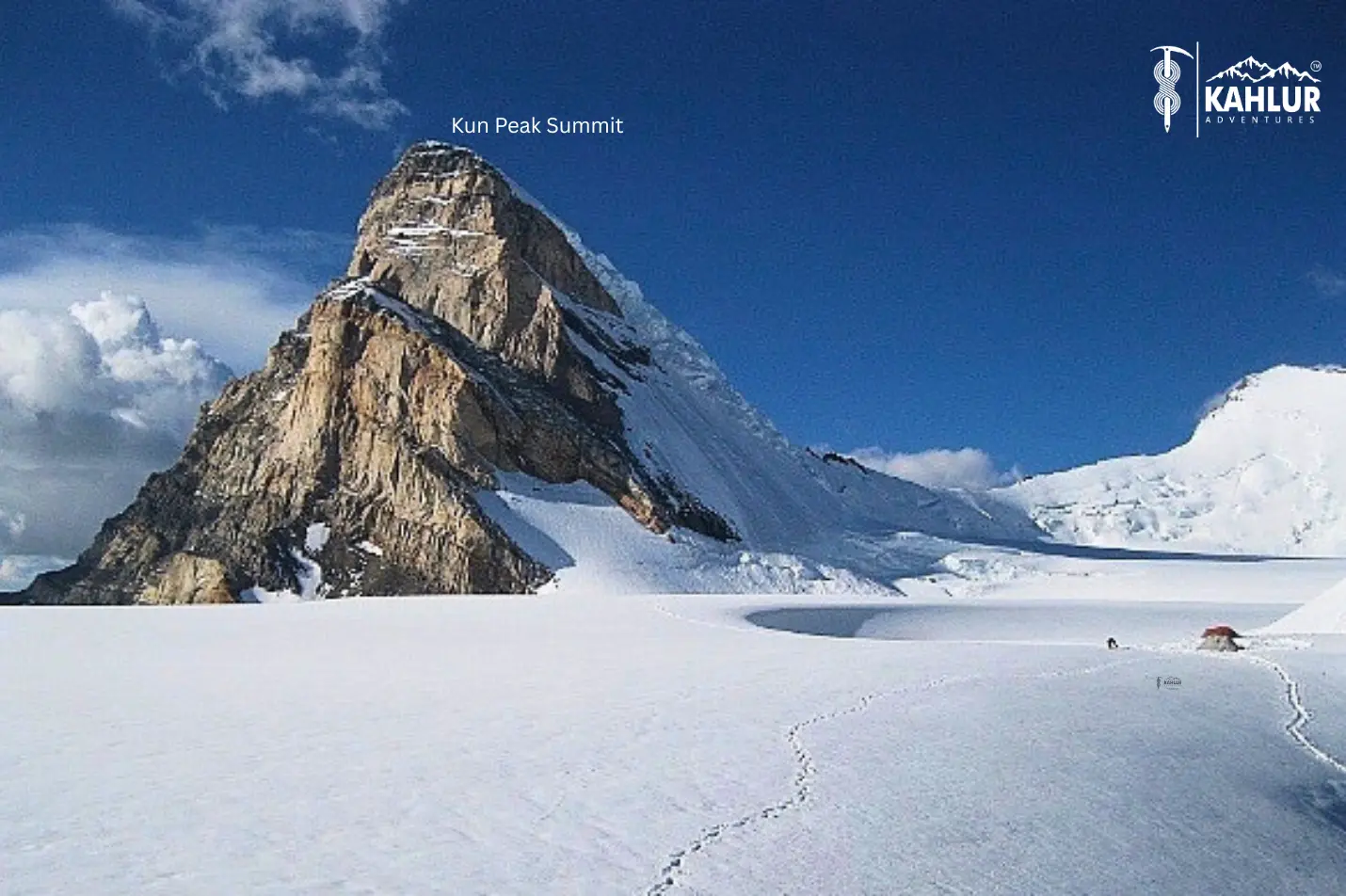
Mount Kun rises in the Zanskar region of Ladakh. It often sits in the shadow of its twin, Nun, but climbers within India know its reputation well. The climb is not highly technical in the traditional sense, yet the altitude changes everything.
Air pressure drops sharply above 5,500 meters. Simple actions feel heavy. Even experienced trekkers pause more often than they expect.
Within the Indian climbing scene, Kun peak climbing in India is seen as a serious step up from peaks like Friendship or Stok Kangri. It demands patience more than aggression.
Best Season and Why Timing Decides Everything
Weather windows on Mount Kun are narrow. A good plan can still fail if timing is off.
- Mid-July to mid-August offers the most stable conditions
- Early July can mean heavy snow and slow progress
- Late September brings colder winds and shorter summit windows
Climbers who respect the mountain wait for the right window. Those who rush often spend days stuck at camp, watching weather updates.
Route, Camps, and the Real Climb Experience
The climb to the summit is gentle but challenging. It is not a technical riddle but a test of stamina. Base camp is set around 4,500 meters. From there, acclimatization begins. Rotations to higher camps help the body adjust before the final push.
- Base Camp to Camp I involves glacier travel and steady elevation gain
- Camp I to Camp II tests endurance with longer snow sections
- Summit push begins early, often before sunrise, with slow and controlled movement
Climbers who pace themselves well often succeed. Those who push too hard early tend to struggle later.
Fitness Expectations That Many People Underestimate
Fitness is not about speed here. It is about staying stable when energy drops. Training should start months before the climb. Not casually, but with intent. Long walks with weight, stair climbs, and breathing control all matter.
A common pattern shows up. Climbers who have done smaller Himalayan peaks adjust better. They already know how their bodies react to altitude. That awareness helps more than raw strength.
Gear That Actually Makes a Difference
Gear choices can quietly decide the outcome of your climb. Not every item matters equally, but a few are non-negotiable.
- High altitude boots that keep your feet warm in extreme cold
- A proper down jacket or suit for summit night
- Reliable crampons and an ice axe for glacier sections
Rental gear works for some items, but personal fit is important. Boots, in particular, should never be compromised.
Why Fixed Departure Treks and Expeditions India Matter
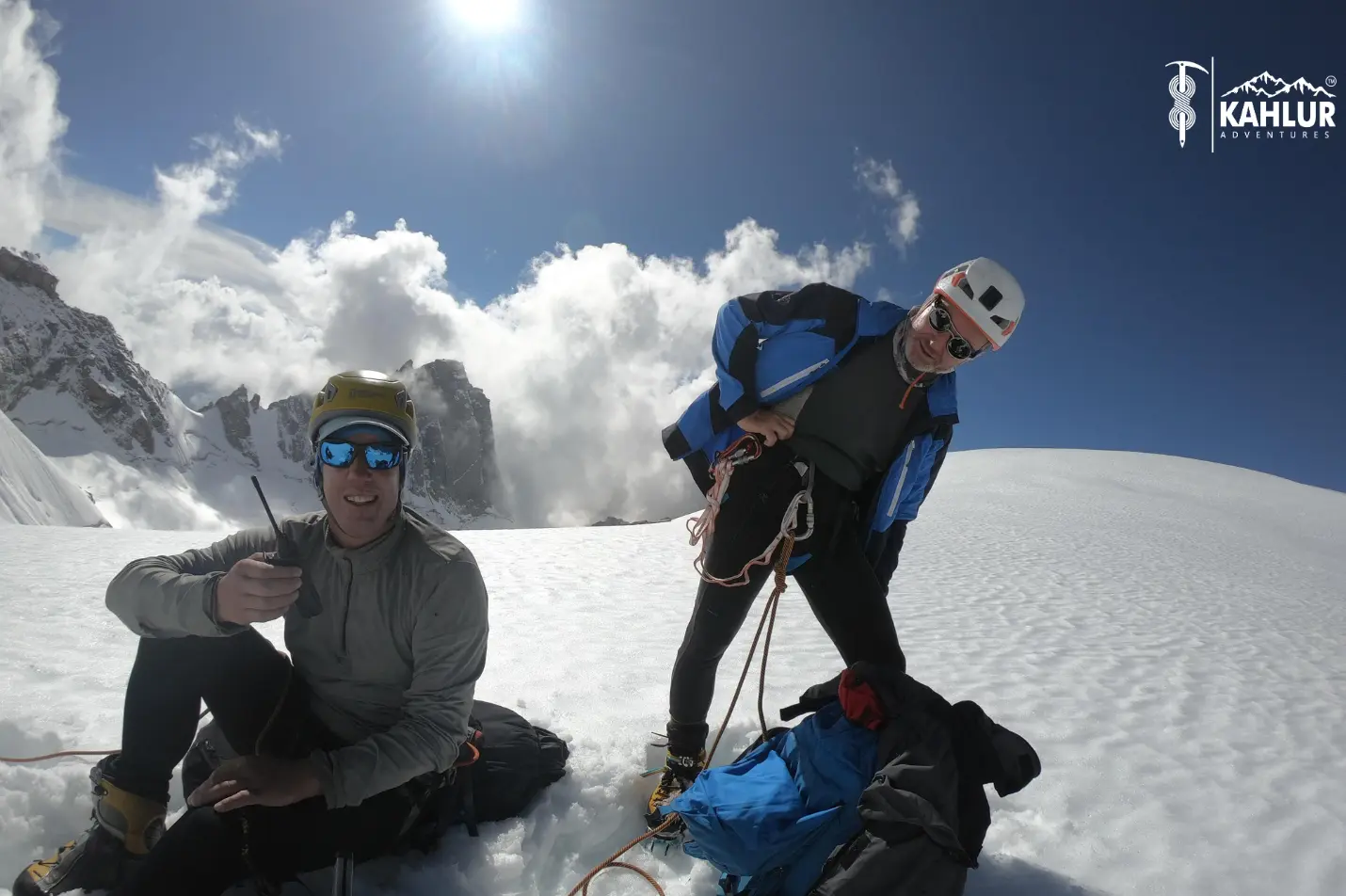
Independent climbing sounds appealing. It feels more adventurous on paper. Reality tends to be different.
Fixed Departure Treks and Expeditions India provide structure. That structure becomes valuable when conditions change or decisions need to be made quickly.
- Itineraries with a steady pace of climbing and acclimatization
- Knowledgeable guides familiar with the area and weather
- Shared logistics that reduce both cost and risk
Risks That Deserve Honest Attention
High altitude climbing carries risks that cannot be ignored or managed casually. Altitude sickness is the most common issue. It does not care about fitness level. It shows up when your body struggles to adapt.
Weather shifts can delay summit attempts for days. Winds pick up quickly in this region. Snow conditions can change overnight.
Crevasses are another factor. Glacier travel requires focus and discipline. Small mistakes can turn serious very quickly.
Experienced climbers often repeat one idea. Reaching the top is optional. Coming back safely is not.
Small Lessons That Stay with You
Some lessons only make sense after a few days on the mountain. It is more difficult to eat at the altitude, but it is more significant than ever. Calories will keep you going even when your appetite declines.
In cold weather, hydration is not easily noticed. That error accumulates over time and manifests itself at the worst time. Pacing is everything. A slow, steady rhythm often beats bursts of energy followed by exhaustion.
Conclusion
Mount Kun tests more than physical strength. It checks patience, awareness, and how well you prepare long before the climb begins. The outcome of each step determines the outcome, starting with the selection of the right season, whether the person chooses to go alone or to Fixed Departure Treks and Expeditions India.
Climbing this peak is not about rushing to the top. It is about moving right, adapting when needed, and knowing when to push or pause. For those ready to take on the challenge with the right guidance, Kahlur Adventures India provides a structured way to approach this demanding yet rewarding expedition.
FAQs
What makes a Mount Kun expedition difficult?
The main challenge is altitude. Even though the route is not highly technical, low oxygen levels and long climbing days make it physically demanding.
How long does Kun peak climbing in India usually take?
Most expeditions last around 18 to 24 days, including acclimatization and weather buffer days.
Are Fixed Departure Treks and Expeditions in India safe for high altitude climbs?
Yes, they offer guided support, structured itineraries, and safety systems that improve overall success and reduce risks.
Do I need prior experience for a Mount Kun expedition?
Yes, prior trekking or climbing experience at high altitude is strongly recommended before attempting Mount Kun.

Sorry, the comment form is closed at this time.