


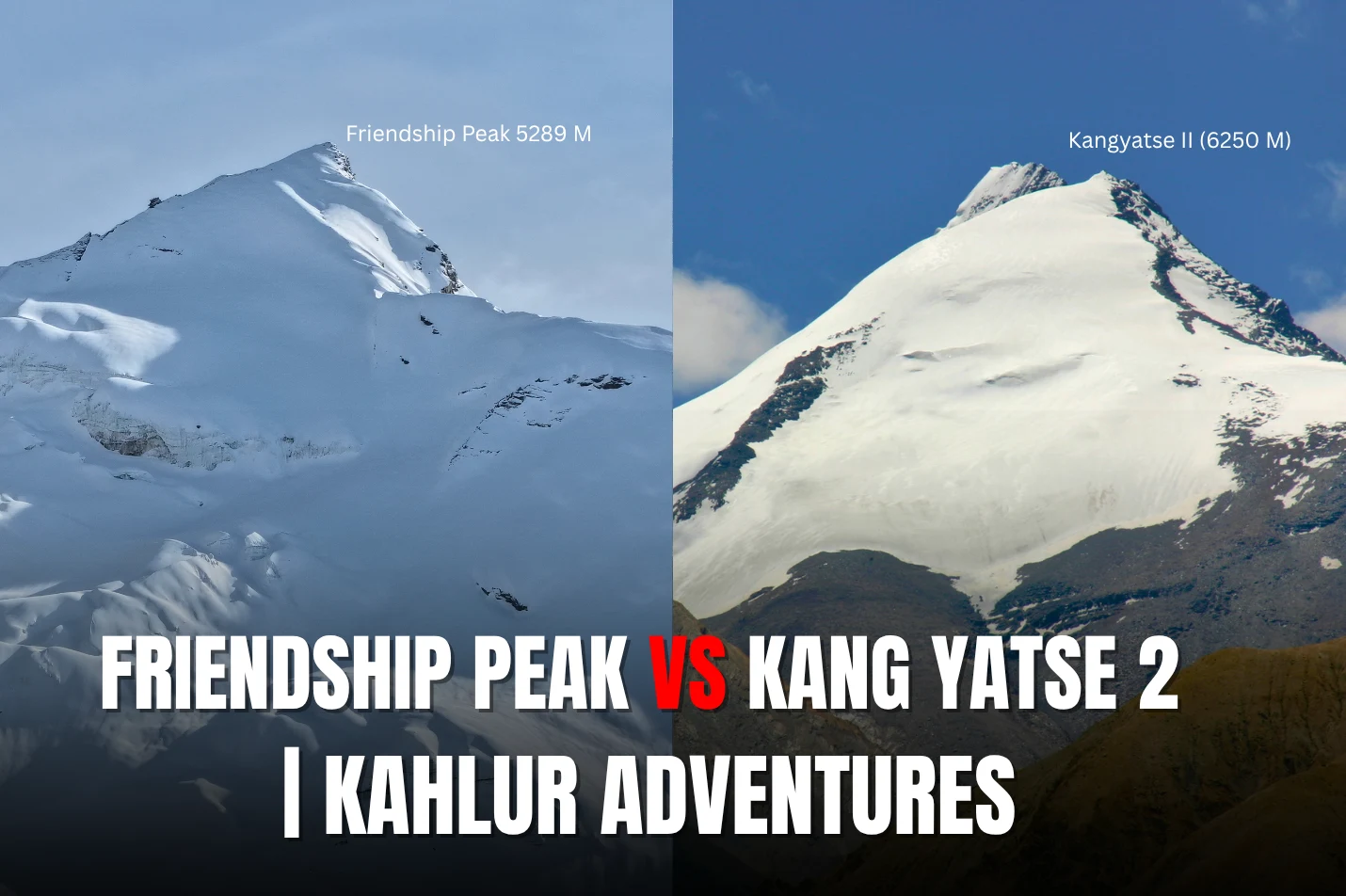
31 Jul Friendship Peak Expedition vs Kang Yatse II Expedition
Two climbers stood at a chai stall in Manali last October, staring at the same weather app, concerning two entirely separate mountains. One wanted glaciers and technical snow. The other wanted altitude and that raw Ladakh silence. Neither was wrong. That’s basically the whole dilemma behind this post.
You are not alone if you are looking for a Friendship Peak Expedition Manali vs Kang Yatse 2 Peak Expedition in Ladakh. You are not alone if you are considering a Friendship Peak Expedition in Manali versus a Kang Yatse 2 Peak Expedition in Ladakh. If by the end of this you will know that one of these peaks just might be a perfect fit in terms of fitness, duration and what you are looking for in a ride, this is one of the most searched, most attempted peaks in the Indian Himalayas at the moment.
What Makes Friendship Peak Different
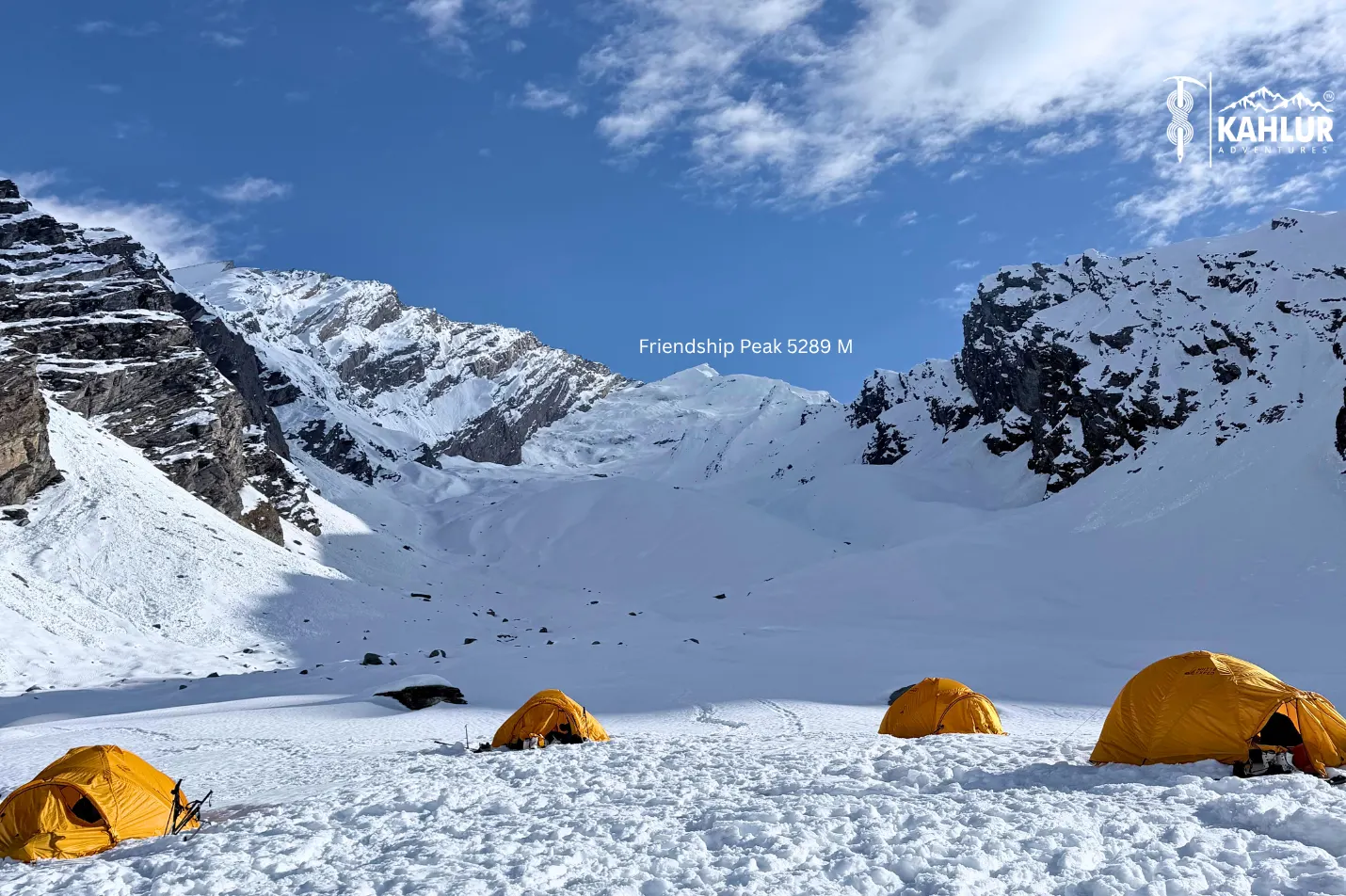
Friendship Peak sits at 5,289 m near Solang Valley, close to Manali. It’s often the first proper mountaineering peak for a lot of Indian climbers and there’s a reason for that. The approach is short. The acclimatization curve is gentler. And the terrain while it does involve glacier walking and a bit of technical snow near the summit ridge does not demand years of prior experience.
A Friendship Peak Trek Himachal Pradesh usually runs somewhere between 7 and 9 days, including the drive from Manali. That’s short compared to most Himalayan expeditions which honestly makes it appealing if you are working with limited leave days. Government employees actually get Special Casual Leave benefits for treks like this, something not a lot of people know about until they start planning.
This is the route itself that passes through the alpine meadows and then rock, moraines and snowfields before reaching the finish. When it’s organized properly, there’s no rush at all. The weather windows in Manali are also comparatively more predictable as it is not as risky as trans Himalayan regions.
Kang Yatse 2, A Different Kind of Beast
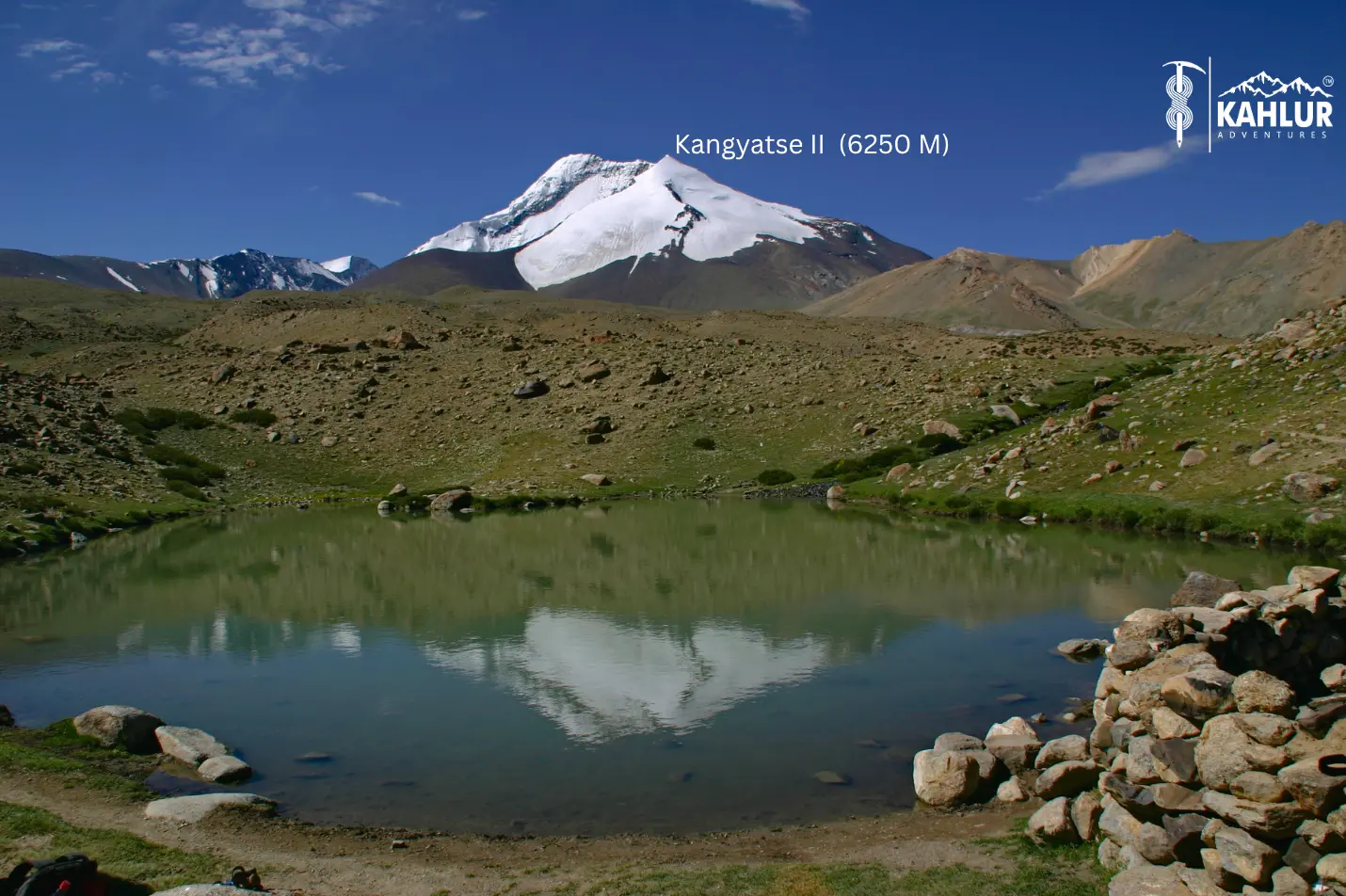
Now Kang Yatse 2 Peak Expedition is a whole different story. At 6,250M, it sits in the Markha Valley of Ladakh and altitude alone changes everything about this climb. You are not just walking higher you are dealing with thinner air for longer stretches, colder nights and a landscape that’s basically a cold desert compared to the green slopes of Manali.
A Kang Yatse 2 Climb takes about 12 days, and may take longer if the climbers require acclimatization. This trek takes you through Markha Valley, one of the most beautiful trekking routes in Ladakh, before the summit push that includes some scree, snow and up to a moderately steep last stretch. Many climbers who have ascended both Kangs have said that Kang Yatse is more of a patience test than a skill test. The ascent is gentle and gradual; and this is by design because that is how people end up with altitude sickness.
This is not a peak you attempt casually. Prior trekking experience above 4,500 m is strongly recommended and honestly, physical prep matters a lot more here than for Friendship Peak.
Comparing the Two Head-to-Head
Here’s where things get practical. Difficulty, duration and cost all stack up differently depending on which mountain you pick.
- Altitude and difficulty: Friendship Peak tops out at 5,289M and suits first-time travel climbers. Kang Yatse 2 goes up to 6,250M and needs prior high-altitude trekking or basic mountaineering knowledge.
- Duration and location: Friendship Peak is a faster Himachal-based climb near Manali roughly a week. Kang Yatse 2 is a longer Ladakh trek through Markha Valley, closer to 12 days.
Cost-wise, Kang Yatse 2 usually runs higher because of the longer duration, permits in Ladakh and logistics of operating in a remote trans-Himalayan zone. Friendship Peak stays more budget-friendly simply because the operational overhead is lower.
Who Should Pick Friendship Peak
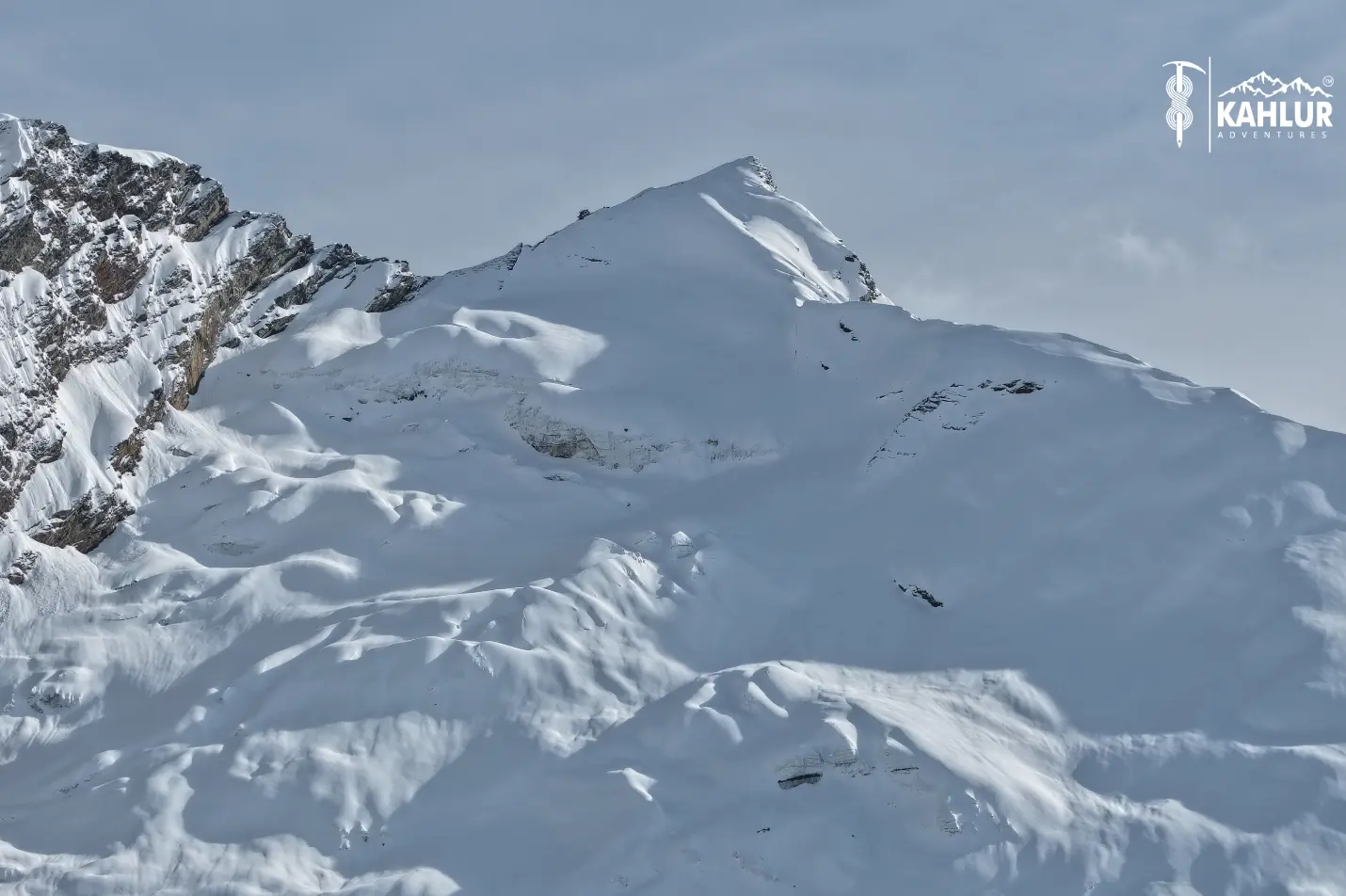
If it’s your first actual attempt to try mountain climbing, then Friendship Peak seems more appropriate. It introduces you to glacier travel, rope and summit day pressure but without the extreme altitude. Climbers who are planning to go to higher peaks, such as the 6000M and 7000M, tend to use Friendship Peak as a stepping stone. It’s great for building confidence and it gives you a feel for how your body will respond to altitude before you make the big commitment.
It’s also a solid pick if you are short on time. A long weekend plus a couple of extra days can get this done, which is not something you can say about most Himalayan expeditions.
Who Should Pick Kang Yatse 2
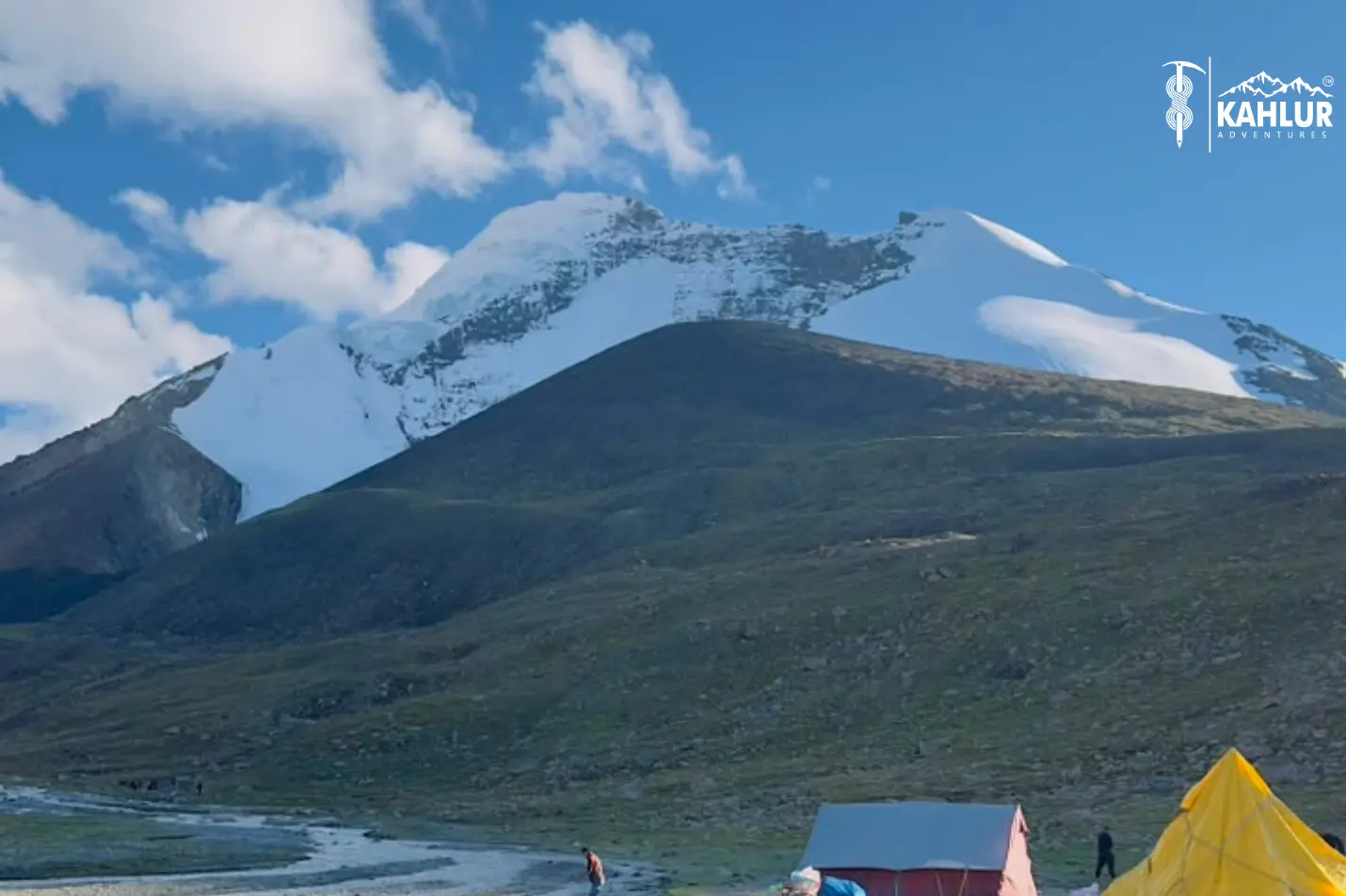
You have already done something of the kind, perhaps a trek above 4500M like Stok Kangri or a high-altitude trek and if you are looking to make a step into technical mountaineering then Kang Yatse 2 is the next obvious step. In all honesty, it’s the Markha Valley approach itself that is worth the journey and that’s without the advent of the summit.
Climbers tracking the Everest prep trail also gravitate toward Kang Yatse 2 because the altitude and cold-weather direction genuinely mirror what higher trips demand. It is not Everest by any stretch but the tasks in pacing, hydration and mental grit are solved now.
What Actually Matters When Choosing
More than many people realize, skill level is important. Many climbers choose a peak based on its appearance in photographs and then find it difficult to reach the summit after climbing only halfway. Tell the truth about your fitness your previous experience in trekking and your previous experience with altitude if any.
Time available matters too. Nine days versus twelve days does not sound like a huge gap on paper but when you’re taking leave from work it adds up fast.
And weather. Manali’s climbing season runs roughly May to October. Ladakh’s window is narrower because of road access and temperature swings, usually June to September. Planning around these windows is not optional it genuinely decides whether your summit attempt even has a shot.
Conclusion
Both peaks earn their reputation for good reason. Friendship Peak gives you a real mountaineering experience without demanding years of prep, perfect for building that first layer of confidence. Kang Yatse 2 moves further, tests altitude tolerance properly and tips climbers who have already put in some groundwork on other treks.
There is no right or wrong answer. It all relies on where you are as a climber and where you want to go as a climber. The most crucial things are to acclimatize properly have a professional guide team and have practical Kahlur Adventures for whichever peak you choose to climb. The company has fixed dates for the Friendship Peak and Kang Yatse 2 guided expeditions and pacing and safety are built in, not summit day.
FAQs
Is Friendship Peak Expedition suitable for beginners?
Yes, Friendship Peak is considered one of the more beginner-friendly Himalayan climbs in Himachal Pradesh. Basic fitness and a willingness to learn glacier walking techniques on-site are usually enough.
How difficult is the Kang Yatse 2 Peak Expedition compared to other Ladakh treks?
Kang Yatse 2 is more demanding than standard Ladakh treks because of the technical summit push and sustained high altitude. Prior experience above 4,500M is recommended before attempting it.
What is the best season for a Friendship Peak Trek in Himachal Pradesh?
May through October generally offers the most stable weather for Friendship Peak, with June to September being the most popular window among climbers.
Do I need prior mountaineering experience for a Kang Yatse 2 Climb?
While technical climbing courses aren’t mandatory, having prior high-altitude trekking experience significantly improves your chances of a safe and successful summit on Kang Yatse

Sorry, the comment form is closed at this time.